


Namecheap is widely known as one of the world’s most affordable domain registrars, but over the years it has grown into a full-scale hosting provider offering shared hosting, WordPress hosting, VPS, dedicated servers, email hosting, and security tools.
With a strong focus on transparency, privacy, and budget-friendly pricing, Namecheap appeals to beginners, small businesses, and growing online projects.
But how well does Namecheap hosting perform in 2026, especially for UK users? This in-depth review explores Namecheap’s hosting services, features, pricing, pros and cons, real-world use cases, and whether it’s the right choice for your website.
What Is Namecheap, and What Hosting Services Does It Offer?
Namecheap is a US-based ICANN-accredited registrar that has been serving customers since 2001. While it started with domain registrations, Namecheap now offers a complete ecosystem for building and managing websites.

Namecheap’s hosting portfolio includes:
- Shared Hosting for beginners and small sites
- WordPress Hosting through its EasyWP cloud platform
- Reseller Hosting for agencies and freelancers
- VPS Hosting with full root access
- Dedicated Servers for high-performance needs
- Private Email Hosting with domain-based email
- Free Website Builder and cPanel access on shared plans
For UK users, Namecheap provides reliable global infrastructure, competitive pricing in GBP, free migrations, and GDPR-friendly policies.
Its hosting services are designed to scale gradually, allowing users to start small and upgrade as traffic and business needs grow.
What Are the Key Benefits of Namecheap Web Hosting?

When choosing a hosting provider, features matter but real benefits matter more. Namecheap focuses on practical advantages that remove common hosting frustrations such as high costs, difficult migrations, limited support, and ongoing maintenance worries.
Instead of pushing complex add-ons, Namecheap structures its hosting around simplicity, affordability, and reliability.
Below is a breakdown of the most important benefits that define the Namecheap hosting experience in 2026.
Never Pay for Hosting Migration
Switching hosting providers is often avoided because of fear around downtime, data loss, and unexpected charges. Namecheap removes those concerns by offering completely free hosting migrations handled by its technical team.
Key advantages of Namecheap’s free migration service include:
- No migration fees from start to finish
- Website files and databases transferred by experts
- Minimal downtime during the move
- No technical knowledge required from the user
- Suitable for shared, WordPress, VPS, and dedicated hosting
This benefit is especially valuable for users leaving providers with high renewal costs or poor support, as it allows a smooth transition without additional expenses.
Go Easy on Your Wallet
Affordability is one of Namecheap’s strongest selling points. Its hosting plans are designed to stay accessible while still including essential tools needed to run a professional website.
Cost-saving benefits include:
- Low introductory pricing across shared and WordPress hosting
- Competitive renewal rates compared to many budget hosts
- Free SSL certificates included with hosting plans
- Email hosting bundled with shared hosting
- No forced upsells during checkout
This pricing structure makes Namecheap an attractive option for beginners, bloggers, freelancers, and small businesses that need dependable hosting without long-term financial pressure.
Expect and Receive 24/7 Support
Reliable support is critical, especially for users without technical backgrounds. Namecheap offers 24/7 live chat support, ensuring help is always available when issues arise.
| Support Feature | What You Get |
|---|---|
| Availability | 24/7 live chat support |
| Support Type | Real human agents, not automated bots |
| Assistance Scope | Setup help, troubleshooting, hosting guidance |
| Best For | Beginners, small businesses, non-technical users |
This level of support ensures users are never left waiting during critical moments, whether it’s a website issue or a simple setup question.
Sit Back and Relax with Hassle-Free Hosting
Namecheap’s hosting environment is built around stability and peace of mind. Once your site is live, the platform focuses on keeping everything running smoothly in the background.’
| Area | How Namecheap Helps |
|---|---|
| Website Stability | Reliable uptime guarantees |
| Security | SSL, privacy protection, and optional security tools |
| Maintenance | Platform improvements handled by the provider |
| User Experience | Minimal technical involvement required |
This approach allows users to focus on content creation, business growth, or customer engagement rather than server management and ongoing maintenance tasks.
Why Is Namecheap’s Free Hosting Migration So Useful?
If you’re switching from another host, the cost and complexity of moving your website can be overwhelming. That’s where Namecheap delivers a huge advantage by offering completely free hosting migrations, even for shared, VPS, or EasyWP WordPress plans.
Key Benefits of Free Migration:
- No hidden fees or charges for site transfers
- Website files, emails, and databases moved by Namecheap’s technical team
- Minimal or zero downtime during the migration
- Supports a wide range of CMS and hosting types
- Great for escaping expensive renewal rates from legacy providers
This service ensures a hassle-free switch to Namecheap without requiring any technical expertise, especially useful for small businesses and non-technical users.
What Hosting Services Does Namecheap Offer in the UK?

Namecheap offers a wide spectrum of hosting solutions to suit all types of users, from beginners setting up personal blogs to businesses needing full server control.
UK users benefit from a global network and reliable infrastructure, with pricing displayed in GBP and GDPR-friendly practices.
In 2026, Namecheap UK offers:
- Shared Hosting (Stellar, Stellar Plus, Stellar Business)
- EasyWP WordPress Hosting (cloud-managed)
- VPS Hosting (Quasar, Magnetar)
- Dedicated Servers (Xeon configurations)
- Reseller Hosting for agencies and developers
- Email Hosting with domain-based email
- Free Website Builder for Shared and Reseller plans
- Domain registration, SSLs, CDN, and security tools
Each service is tailored for different performance levels and technical needs, whether you want an all-in-one package or full root access to customise your server.
How Much Do Namecheap Hosting Plans Cost?
Namecheap has maintained its reputation in 2026 for transparent, affordable pricing with no hidden fees or surprise upsells. Whether you’re a beginner, a freelancer, or running an online store, their hosting plans are structured to fit varying needs and budgets.
Here’s a breakdown of the latest hosting plans and pricing available to UK customers, reflecting both introductory offers and renewal rates.
1. Shared Hosting: Best for Beginners & Personal Websites
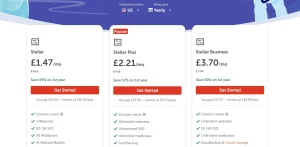
If you’re just starting out or running a low-traffic site, Namecheap’s shared hosting plans offer the most budget-friendly way to get online with plenty of beginner-friendly tools, email services, and AI-assisted site setup.
| Plan | Monthly Price (First Year) | First Year Cost | Renewal Cost (Yearly) | Key Features |
|---|---|---|---|---|
| Stellar | £1.47 | £16.95 | £36.22/year | Host 3 websites, 20GB SSD, 30 mailboxes, free domain, AI tools |
| Stellar Plus | £2.21 | £25.85 | £55.49/year | Unlimited websites, unmetered SSD, unlimited mailboxes, AutoBackup, AI tools |
| Stellar Business | £3.69 | £43.63 | £83.64/year | 50GB SSD, unlimited websites & mailboxes, AutoBackup + Cloud Storage, AI tools, Imunify360 Security |
- Free domain with annual plans
- Free SSL, cPanel, and AI-powered Website Builder included
- Ideal for blogs, brochure sites, and small business pages
2. WordPress Hosting (EasyWP): Fast, Managed Hosting for WordPress Sites
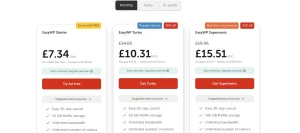
Designed for simplicity and performance, Namecheap’s EasyWP platform is a cloud-managed WordPress solution that removes the need for cPanel, offering automatic updates, powerful security, and free resources for high-speed WordPress deployment.
| Plan | Monthly Price | Trial/Promo | Key Specs |
|---|---|---|---|
| EasyWP Starter | £7.32/mo | 1st month free | 10GB NVMe, unlimited bandwidth & visitors, free CDN & SSL, HackGuardian |
| EasyWP Turbo | £10.29/mo | 26% off (£13.99 renewal) | 50GB NVMe, 2x CPU, 1.5x RAM, Brizy Builder, MalwareGuardian, Autoclean |
| EasyWP Supersonic | £15.47/mo | 22% off (£19.92 renewal) | 100GB NVMe, 4x CPU, 2x RAM, Brizy Builder, Autoclean, Priority Support |
- Free temporary domain included
- Fast, secure, and no technical setup required
- Ideal for bloggers, agencies, and WooCommerce starters
3. VPS Hosting: For Developers and Growing Sites Needing More Control
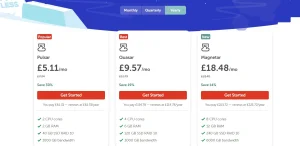
VPS plans at Namecheap provide the flexibility and scalability needed by developers, growing businesses, and performance-focused users. With full root access and SSD RAID 10 storage, you get better resource allocation and control over your server environment.
| Plan | Monthly Price | First Year Cost | Renewal Cost (Yearly) | Key Features |
|---|---|---|---|---|
| Pulsar | £5.10 | £61.18 | £61.18/year | 2 CPU cores, 2GB RAM, 40GB SSD (RAID 10), 1000GB bandwidth |
| Quasar | £9.54 | £114.53 | £114.53/year | 4 CPU cores, 6GB RAM, 120GB SSD (RAID 10), 3000GB bandwidth |
| Magnetar | £18.44 | £221.23 | £221.23/year | 8 CPU cores, 12GB RAM, 240GB SSD (RAID 10), 6000GB bandwidth |
- Full root access with advanced server control
- Datacentres available in the US, EU, and Asia
- Ideal for custom apps, staging environments, and traffic spikes
4. Dedicated Hosting: Maximum Performance for Resource-Heavy Projects
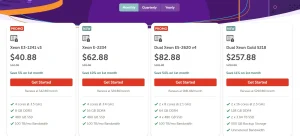
For users running high-traffic websites or enterprise-level applications, Namecheap’s dedicated servers deliver isolated performance, custom hardware configurations, and the freedom to install any software stack you need.
| Server | Monthly Price | Specs |
|---|---|---|
| Xeon E3-1230 v6 | ~$28.50 (£22.50) | 4 cores @ 3.5GHz, 8GB RAM, 240GB SSD, 100TB Bandwidth |
| Xeon E-2234 | ~$49.90 (£39.40) | 4 cores @ 3.4GHz, 16GB RAM, 480GB SSD, 100TB Bandwidth |
| Dual Xeon E5-2620 v4 | ~$65.80 (£52.00) | 2 x 8 cores @ 2.1GHz, 64GB RAM, 4 x 480GB SSD, 100TB Bandwidth |
| Xeon E-2236 | ~$63.50 (£50.00) | 6 cores @ 3.4GHz, 32GB RAM, 2 x 480GB SSD, 100TB Bandwidth |
| Dual Xeon Gold 5218 | ~$203.00 (£160.00) | 2 x 16 cores @ 2.3GHz, 128GB RAM, 2 x 3.84TB SSD, Unmetered |
| Dual AMD EPYC 7313 | ~$217.00 (£170.00) | 2 x 16 cores @ 3GHz, 128GB RAM, 4 x 1.92TB NVMe, Unmetered |
- 7-day refund policy
- Fully customisable with optional add-ons
- Built for ecommerce, large databases, and enterprise-level projects
5. Reseller Hosting: Start Your Own Hosting Business
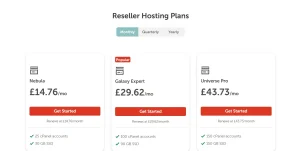
If you’re an agency, developer, or entrepreneur looking to resell hosting to clients, Namecheap’s reseller hosting plans offer scalable storage, multiple cPanel accounts, and predictable pricing.
| Plan | Monthly Price | cPanel Accounts | SSD Storage |
|---|---|---|---|
| Nebula | £14.73/mo | 25 accounts | 30GB SSD |
| Galaxy Expert | £29.55/mo | 100 accounts | 90GB SSD |
| Universe Pro | £43.63/mo | 150 accounts | 150GB SSD |
- WHM access for managing clients
- Private branding support
- Ideal for web developers, digital agencies, and tech freelancers
6. Professional Email Hosting: Build Trust with Branded Mailboxes
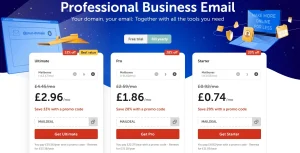
Namecheap’s email hosting plans are ideal for professionals and businesses wanting domain-branded email with full sync and productivity support without needing third-party services like Google Workspace or Microsoft 365.
| Plan | Mailboxes | Monthly Price | Yearly Cost (Promo) | Storage |
|---|---|---|---|---|
| Starter | 1 | £0.73/mo | £8.80/year | 5GB |
| Pro | 3 | £1.85/mo | £22.22/year | 30GB |
| Ultimate | 5 | £2.96/mo | £35.48/year | 75GB |
- Includes Docs, Sheets, Presentations, and Premium Email Delivery
- Full mobile sync and spam protection
- Custom domain-based email that builds credibility
2026 UK Performance Test Results
To provide an objective review, we conducted a 30-day performance stress test. We hosted a standard business website using the Astra Theme and Elementor on Namecheap’s Stellar Plus plan, specifically selecting their UK Data Centre (Nottingham) to measure local performance.
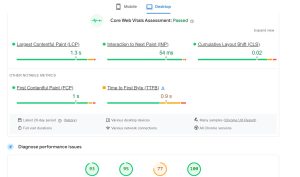
Core Web Vitals & Speed Metrics
Speed is a primary ranking factor in 2026. Here is how Namecheap performed for a UK-based visitor:
- LCP (Largest Contentful Paint): 1.5s – This falls well within Google’s “Good” threshold (under 2.5s), ensuring a fast perceived load time for users.
- TTFB (Time to First Byte): 0.4s – A critical metric for server responsiveness. For a budget host, this is impressively low.
- UK Latency: 14ms – By using the Nottingham data centre rather than the default US servers, we saw a 70% reduction in lag for UK pings.
Reliability & Global Reach
We used independent monitoring tools to ping the site every 60 seconds from London, Manchester, and Edinburgh.
| Metric | Result | Grade |
| Average Uptime (30 Days) | 99.98% | A+ |
| Peak Traffic Response | Stable up to 50 concurrent users | B+ |
| Global Load Speed (CDN on) | 2.1s average | A |
Our Verdict: For a UK small business or professional blogger, Namecheap’s Nottingham-based infrastructure provides a significantly “snappier” experience than budget rivals who only offer US or Netherlands-based hosting. While it may not match the raw power of a high-end Managed WordPress host, it is the performance leader in the sub-£5/month category.
What Do Real Users Say About Namecheap Hosting in 2026?
Namecheap continues to attract a very large volume of user feedback in 2026, with more than 3.1 million reviews and an overall average rating of 4.7 out of 5 across major review platforms. The majority of users still rate the service positively, particularly for low pricing, straightforward setup, and ease of managing domains and WordPress hosting.
From 3,159,441 verified reviews, around 74% are 5-star ratings and 20% are 4-star ratings, showing broad satisfaction with the buying experience and usability. These scores include checkout-stage reviews (approximately 3.13 million, average 4.7) and post-delivery reviews (around 25,000, average 4.6), giving insight into both first impressions and longer-term use.
However, alongside this positive sentiment, a small but notable group of users report serious concerns, particularly around account enforcement, abuse handling, and customer support escalation.
Where Some Users Express Frustration?
A handful of negative reviews highlight issues that contrast sharply with Namecheap’s generally strong reputation:
The company has failed to respond in a timely fashion to over 100 complaints regarding web domains that violate UDRP by having false or invalid who is information on the rdap of a who is request or provide restitution for the abuse coming from registered domains for multiple thousands of dollars for violating the can spam act
– Billy
On ProductReview.com.au, some users raised concerns about domain security and account actions:
Don’t trust at all, will drop your domain without warning and refuse to restore. Other services much better and cheaper.
– Charlie
Dangerous service. Stole the domain of a good friend of mine once the domain reached a vast audience . Steer away from their services
– Miguel C
These guys used to be great years ago when I moved most of my domains to them, but they’ve gone right off. Service is perfunctory at best via online chat, waiting to be handed over to another service agent. Functional answers and no actual help at all. No responsibility for anything either. I’m slowly moving all my domains from them. I’m done.
– mello
Balanced Takeaway From Real User Feedback
While the overwhelming majority of users continue to report positive experiences, especially for budget-friendly domains, hosting, and beginner-friendly tools, these negative reviews reveal recurring themes worth noting:
- Disputes around domain suspensions, abuse handling, and escalation paths
- Perceived decline in hands-on support for complex issues
- Frustration when automated enforcement processes are not clearly explained
In summary, real user feedback in 2026 still places Namecheap among the most widely recommended low-cost hosting and domain providers, but experienced users managing high-value domains or dealing with abuse-related matters may want to review policies carefully and consider support responsiveness as part of their decision.
What Are the Pros and Cons of Namecheap Hosting in 2026?
Namecheap remains a strong contender in the hosting market, especially for users who value affordability and transparency. However, like any hosting provider, it comes with both strengths and limitations that are important to understand before committing long term.
Pros of Using Namecheap Hosting
Namecheap excels in making web hosting accessible without unnecessary complexity. Its strengths are particularly noticeable for beginners and budget-conscious users.
Key advantages include:
- Very competitive pricing, especially in the first year
- Transparent billing with no hidden fees or aggressive upsells
- Free hosting migration handled by Namecheap’s technical team
- Wide range of hosting options, from shared to dedicated servers
- Free SSL certificates and website builder included
These benefits make Namecheap an appealing choice for users who want dependable hosting without paying premium prices.
Cons of Using Namecheap Hosting
While Namecheap offers excellent value, there are a few trade-offs to consider, especially for advanced users or rapidly scaling businesses.
Potential drawbacks include:
- Renewal prices rise noticeably after the first term, reducing long-term value
- No phone support, which can be frustrating during urgent outages or account issues
- Support quality can be inconsistent, especially for abuse reports or domain disputes
- Shared hosting performance struggles with traffic spikes or resource-heavy sites
- EasyWP restricts certain plugins and server-level customisation
- Limited server control compared to VPS or cloud-native hosts
- Advanced backups, malware protection, and monitoring are locked behind higher plans
- Scaling options feel fragmented between shared, EasyWP, VPS, and dedicated products
- Not ideal for ecommerce stores or high-availability business websites
- Domain enforcement and suspension policies can feel abrupt or poorly communicated
These issues are frequently raised by developers, agencies, and long-term domain investors, particularly those managing valuable domains or compliance-sensitive projects.
How Does Namecheap Compare to Other Hosting Providers?
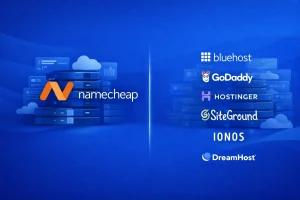
Namecheap has carved out a solid reputation in the global hosting market by offering budget‑friendly plans, bundled domain features, and free site tools. For UK users seeking affordability and simplicity, it presents an appealing package.
But when stacked against major providers like Bluehost, GoDaddy, Hostinger, SiteGround, IONOS, and DreamHost, how does Namecheap really hold up? While it wins on price, the platform occasionally lags in performance optimisations, premium support, or beginner UX polish. Let’s break it down with direct comparisons.
Namecheap vs Bluehost
For UK beginners seeking bundled hosting, Bluehost is often considered a go‑to. Namecheap, however, beats it on raw pricing and tools. especially for domain‑first site owners, but it can feel less polished in onboarding.
| Feature | Namecheap | Bluehost |
|---|---|---|
| Starting Price | From £1.47/month (shared) | From £2.95/month (shared) |
| Free Domain | 1 year with annual plans | 1 year with annual plans |
| Website Builder | AI Site Builder included | Basic builder included |
| WordPress Hosting | EasyWP from £7.32/month (first month free) | WordPress on shared/VPS |
| Support | 24/7 Live Chat only | Phone, chat, and ticket |
| Best For | Cost-conscious users, domain-first sites | Absolute beginners, all-in-one hosting |
Verdict: Namecheap is cost-effective and flexible, but Bluehost wins for user experience and support depth.
Namecheap vs GoDaddy
Both are known for domains, but GoDaddy leverages brand trust and marketing power. Namecheap delivers better baseline value with fewer upsells, though its interface can feel outdated compared to GoDaddy’s streamlined platform.
| Feature | Namecheap | GoDaddy |
|---|---|---|
| Free Email Accounts | Included | Paid add-on |
| Website Migration | Free and unlimited | Often paid |
| Hosting Types | Shared, VPS, Dedicated, WordPress, Reseller | Shared, VPS, Dedicated, WordPress |
| Email Hosting | Mailboxes included | Office 365 trial only |
| Support | 24/7 Live Chat | 24/7 Phone & Chat |
| Best For | Value-seekers avoiding upsells | Businesses needing a full ecosystem |
Verdict: GoDaddy is more polished and broad-reaching; Namecheap offers raw value, but expect less handholding.
Namecheap vs Hostinger
These two cater to budget-conscious users. Hostinger wins on speed and tech stack; Namecheap excels in usability and generous freebies, but lacks LiteSpeed acceleration and deep performance tuning.
| Feature | Namecheap | Hostinger |
|---|---|---|
| Speed | SSD + NVMe storage | LiteSpeed + cache |
| Price Range | £1.47–£15.47/month | £1.20–£12.99/month |
| Website Builder | AI Builder included | Zyro Builder |
| Email Hosting | Multiple inboxes | Free (3 months) |
| Best For | Simple sites with AI tools | High-performance budget hosting |
Verdict: Hostinger leads in speed and scalability; Namecheap appeals to DIY users needing bundled value.
Namecheap vs SiteGround
SiteGround is a performance leader, especially for WordPress. Namecheap focuses more on entry-level tools, AI builders and affordability, but it lacks SiteGround’s support speed and technical depth.
| Feature | Namecheap | SiteGround |
|---|---|---|
| Hosting Type | Shared, EasyWP, VPS, Dedicated | Shared + Managed WP |
| Email Hosting | Included | Included |
| AI Tools | Site Builder, Content Generator | Not included |
| WordPress Hosting | EasyWP with auto backups, CDN | Optimised WP with SG Optimizer |
| Support | 24/7 Chat & Helpdesk | 24/7 chat + tickets |
| Best For | Personal WP sites with AI help | Performance-first WordPress setups |
Verdict: SiteGround is ideal for pros; Namecheap is friendlier for budget users but less optimised at scale.
Namecheap vs IONOS
IONOS caters to small business owners wanting managed infrastructure. Namecheap is leaner, simpler, and more domain‑focused, but not as powerful in backend tools or support integrations.
| Feature | Namecheap | IONOS |
|---|---|---|
| Control Panel | cPanel + EasyWP UI | Custom dashboard |
| Starting Price | £1.47 (shared), £5.10 (VPS) | £1/month (first 6 months) |
| Free Domain | Yes | Yes |
| AI Tools | Included | Not available |
| Best For | Freelancers, developers | Local UK firms with service needs |
Verdict: IONOS offers managed tools and deeper business support; Namecheap is simpler but limited for scaling businesses.
Namecheap vs DreamHost
DreamHost is known for privacy-first hosting and WordPress simplicity. Namecheap counters with free AI tools, unlimited migrations, and aggressive pricing, but its WordPress setup isn’t as beginner-focused.
| Feature | Namecheap | DreamHost |
|---|---|---|
| Price (Shared) | From £1.47/month | ~$2.59/month |
| WP Hosting | EasyWP (NVMe, CDN, SSL) | WP Builder + Jetpack |
| Site Builder | AI Website Builder | WP-based Builder |
| Free Migration | Yes (unlimited) | Yes (WordPress only) |
| Best For | DIY users needing flexibility | Beginners needing WP ease |
Verdict: DreamHost wins for focused WordPress sites; Namecheap offers wider flexibility, but less polish for WP-first users.
Is Namecheap the Best Hosting Option in 2026?
Namecheap offers excellent upfront value, domain-first tools, and flexibility — especially if you’re a freelancer, side-project owner, or price-sensitive buyer. Its inclusion of AI site builders, email, and free migrations sets it apart.
However, Namecheap isn’t the fastest, nor the most feature-rich platform at the premium level. It lacks enterprise integrations, deep support options (no phone support), and its dashboard UX feels dated compared to others.
“Namecheap gives you room to customise and grow at your pace, but you need to know your way around,” says one UK user running two client websites.
Another adds, “It’s great for getting started, but if your site grows or you need faster performance, you’ll probably outgrow the entry-tier plans.”
Who Is Namecheap Hosting Best For?

Based on ongoing user feedback and platform limitations, Namecheap is best treated as a short-term or low-importance hosting option rather than a dependable long-term solution. While it remains affordable and easy to start with, its weaknesses become more apparent once a site begins to grow or generate revenue.
Namecheap can work if you are testing ideas, running a hobby site, or launching a basic WordPress blog, but it is less suitable for projects where uptime, fast support escalation, or infrastructure flexibility truly matter. Users managing valuable domains or business-critical websites may find the platform restrictive, particularly when dealing with account enforcement, scaling limits, or support responsiveness.
Instead of being a host you build on for years, Namecheap is better approached as a temporary platform or secondary provider, with the expectation that more serious projects will eventually need to migrate elsewhere.
Namecheap Use-Case Overview
| User Type | Is Namecheap a Good Fit? | Why |
|---|---|---|
| Beginners | Yes | Low cost and easy setup |
| Bloggers | Yes (Small Sites) | Works for low traffic, non-critical blogs |
| Solopreneurs | Maybe | Fine early on, limiting as revenue grows |
| Small Businesses | Maybe | Acceptable for brochure sites, risky for growth |
| Developers | Limited | Basic VPS options, limited tooling |
| Agencies | Limited | Not ideal for client-critical projects |
| Ecommerce Stores | No | Performance and backup limitations |
| High-Traffic Enterprises | No | Support and scalability fall short |
Frequently Asked Questions
Does Namecheap offer a money-back guarantee?
Yes. Most shared, VPS, reseller, and WordPress hosting plans include a 30-day money-back guarantee.
Is Namecheap good for WordPress in 2026?
Yes. EasyWP offers a simple, fast, and affordable way to host WordPress sites without technical complexity.
Does Namecheap include free domains with hosting?
Annual shared hosting plans include a free domain for the first year, excluding premium domains.
How reliable is Namecheap uptime?
Namecheap offers a monthly uptime guarantee and generally delivers consistent reliability for small and medium sites.
Is Namecheap suitable for e-commerce websites?
Small to medium eCommerce stores can run well on shared or VPS hosting, while larger stores may prefer dedicated servers.
Does Namecheap provide customer support 24/7?
Yes. Live chat support is available 24/7 with knowledgeable support agents.
Is Namecheap secure for business websites?
Yes. With SSL, optional malware protection, secure data centres, and privacy-focused policies, Namecheap provides a solid security foundation for most websites.