



Have you ever wondered where your website actually lives after you publish it online? Every website you visit is stored on a server, and web hosting is the service that keeps that server connected to the internet so people can access your site at any time. If you are planning to launch a blog, business website, or online store in the UK, understanding hosting is one of the most important first steps.
Many beginners search for answers to the question What are the 4 types of web hosting because choosing the wrong hosting type can lead to slow performance, downtime, or unnecessary costs.
The four main hosting options are shared hosting, VPS hosting, dedicated hosting, and cloud hosting. Each option offers different levels of price, performance, control, and scalability. By understanding how these hosting types work, you can choose a solution that matches your website goals, technical skills, and budget.
What Are the 4 Types of Web Hosting, and Why Does Your Choice Matter?

When you start building a website, the first technical decision you face is selecting a hosting service. If you search online for What are the 4 types of web hosting, you will usually find four main categories. These include shared hosting, VPS hosting, dedicated hosting, and cloud hosting. Each type represents a different way servers are used to store and deliver your website.
Web hosting matters because it directly affects how your website performs, how secure it is, and how easily it can grow over time. A hosting plan that works for a small personal blog may struggle to support a busy online store or a rapidly growing business website.
Understanding these hosting types helps you match your needs with the right infrastructure.
Key hosting infrastructure options include the following:
- Shared hosting where multiple websites share the same server resources
- VPS hosting which divides a physical server into virtual environments
- Dedicated hosting that gives you an entire server for your website
- Cloud hosting that runs your site across multiple connected servers
Your choice of hosting can influence several important areas of your website:
- Website speed and loading performance
- Security and data protection
- Scalability as your traffic grows
- Monthly or annual hosting costs
For UK website owners, selecting the right hosting type means balancing budget, performance, and reliability while ensuring visitors can access your website smoothly.
What Is Shared Hosting, and Is It the Cheapest Way to Get Online?

Shared hosting is often the starting point for new websites. If you are exploring What are the 4 types of web hosting, this option is usually the most beginner friendly and affordable choice available.
In shared hosting, multiple websites are stored on the same server and share its resources such as CPU power, memory, and storage. Because many users share the same infrastructure, hosting companies can offer this service at a lower price.
This type of hosting is commonly used for smaller websites that do not require significant computing power.
Shared hosting works well for several types of websites:
- Personal blogs or hobby websites
- Small business websites
- Portfolio websites for freelancers
- Community or informational sites with moderate traffic
One of the main advantages of shared hosting is simplicity. Most hosting providers configure the server environment for you, which means you do not need advanced technical skills to manage your site.
Shared hosting benefits include the following:
- Low cost hosting plans that fit beginner budgets
- Easy to manage dashboards such as cPanel
- Pre configured server environments
- Built in tools like email hosting and website builders
However, shared hosting also has limitations. Because resources are shared among multiple websites, performance can fluctuate if another site on the server receives high traffic.
Other potential limitations include the following:
- Reduced control over server settings
- Performance changes due to resource sharing
- Security risks if another website on the same server is compromised
Despite these drawbacks, shared hosting remains one of the most accessible ways to launch your first website online.
What Is VPS Hosting, and How Is It Different From Shared Hosting?

VPS hosting stands for Virtual Private Server hosting. It is often considered the middle ground between shared hosting and dedicated hosting. If your website begins to outgrow shared hosting, VPS hosting can provide better performance and flexibility.
A VPS server works by dividing a physical server into multiple virtual environments. Each virtual server functions independently with its own operating system, allocated resources, and configuration options.
Unlike shared hosting, where resources are distributed across many websites, VPS hosting provides dedicated resource allocations within a shared server environment.
VPS hosting is suitable for websites that require more stability and control:
- Growing business websites with increasing traffic
- Web applications requiring custom configurations
- Online stores that need reliable performance
- Developers who need server level control
Advantages of VPS hosting include the following:
- Dedicated resources allocated to your virtual server
- Improved stability compared with shared hosting
- Greater flexibility for installing software and applications
- Better security through isolated environments
However, VPS hosting also introduces additional responsibilities. Many VPS plans require users to configure server settings and maintain system updates.
Potential challenges include the following:
- Higher costs compared with shared hosting
- Technical knowledge required for server management
- Responsibility for maintaining security and updates
Some providers offer managed VPS hosting where the hosting company handles server maintenance. This can make VPS hosting more accessible for users who want improved performance without managing the infrastructure themselves.
What Is Dedicated Hosting, and When Do You Actually Need a Whole Server?

Dedicated hosting is one of the most powerful hosting solutions available. In this model, your website runs on a physical server that is used exclusively by your organisation.
Unlike shared or VPS hosting, there are no other websites using the server resources. This means your website receives the full processing power, storage capacity, and bandwidth of the machine.
Dedicated hosting is typically used by large organisations and high traffic websites that require consistent performance.
This hosting type is ideal for several scenarios:
- High traffic ecommerce platforms
- Enterprise websites and applications
- Financial or healthcare platforms with strict security requirements
- Large databases or complex web applications
Key benefits of dedicated hosting include the following:
- Maximum performance with no shared resources
- Full control over server configuration
- Strong security when properly configured
- Ability to customise software and operating systems
However, dedicated hosting also comes with significant responsibilities and costs.
Important considerations include the following:
- Higher monthly costs compared with other hosting types
- Advanced technical knowledge required to manage the server
- Responsibility for software updates and security configurations
Some businesses choose managed dedicated hosting services where the provider handles server maintenance and monitoring.
For most beginners or small businesses, dedicated hosting may be unnecessary. However, for large scale websites that require maximum reliability and performance, it can be the most suitable solution.
What Is Cloud Hosting, and Why Is It Often the Most Scalable Option?

Cloud hosting is one of the fastest growing hosting technologies in the industry. Instead of relying on a single server, cloud hosting distributes your website across a network of interconnected servers.
This structure allows resources to be allocated dynamically depending on demand. If one server experiences issues, another server in the network can continue delivering your website.
Because of this design, cloud hosting is often considered one of the most reliable and scalable hosting solutions.
Cloud hosting is commonly used for websites that expect variable traffic levels:
- Startups and rapidly growing businesses
- Websites that experience seasonal traffic spikes
- Applications that require high uptime
- Online platforms with unpredictable visitor volumes
Key advantages of cloud hosting include the following:
- High reliability due to distributed infrastructure
- Flexible resource allocation when traffic increases
- Faster performance through scalable resources
- Reduced downtime because of server redundancy
Another important benefit of cloud hosting is scalability. Instead of upgrading to a new server, resources can be increased or decreased based on your website’s needs.
However, cloud hosting also has potential limitations:
- Pricing can vary depending on usage levels
- Some configurations require technical expertise
- Costs may increase during heavy traffic periods
Despite these considerations, cloud hosting is often recommended for websites that need reliability and room for future growth.
What Are the 4 Types of Web Hosting Compared Side by Side?
Understanding the differences between hosting options becomes easier when you compare them directly. While shared hosting is ideal for beginners, other hosting types offer increasing levels of performance, control, and scalability.
Shared hosting focuses on affordability and simplicity. VPS hosting offers a balance between cost and performance. Dedicated hosting provides full control and maximum power, while cloud hosting delivers flexible infrastructure that scales with demand.
When deciding What are the 4 types of web hosting and which one suits your needs, it helps to evaluate them based on practical factors such as cost, performance, and scalability.
Below is a comparison that highlights how the four main hosting types differ:
| Hosting type | Best for | Cost (typical) | Ease for beginners | Performance | Scalability | Control | Key risk |
|---|---|---|---|---|---|---|---|
| Shared hosting | Small websites and beginners | Low | Very easy | Moderate | Limited | Low | Performance affected by other sites |
| VPS hosting | Growing websites | Medium | Moderate | High | Moderate | Medium | Requires technical knowledge |
| Dedicated hosting | High traffic enterprises | High | Difficult | Very high | High | Full | Expensive and complex management |
| Cloud hosting | Scalable business websites | Medium to high | Moderate | High | Very high | Medium | Variable pricing |
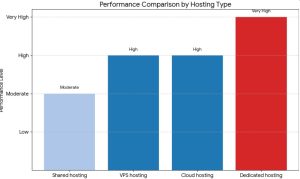
When reviewing these hosting types, it becomes clear that each option serves different needs. A beginner website may perform perfectly well on shared hosting, while a large ecommerce platform may require dedicated or cloud infrastructure.
Choosing the right hosting type depends on your expected traffic, budget, and technical expertise.
What Are the Common “Extra” Hosting Types You’ll See, and How Do They Relate to the Main Four?
When researching hosting services, you may encounter additional hosting terms that appear different from the four primary infrastructure types. However, many of these options are built on top of shared, VPS, dedicated, or cloud hosting environments.
Understanding these additional hosting categories helps you avoid confusion when comparing hosting providers.
Managed Hosting (Management Layer, Not a Separate Infrastructure)
Managed hosting refers to a service model where the hosting provider takes responsibility for server maintenance, security updates, and technical optimisation.
Instead of managing the server yourself, the hosting company performs tasks such as software updates, monitoring, backups, and performance improvements.
Managed hosting benefits include the following:
- Automatic updates and maintenance
- Professional technical support
- Enhanced security monitoring
- Reduced technical workload for website owners
Managed hosting can exist on different infrastructure types such as shared, VPS, dedicated, or cloud hosting.
WordPress Hosting (Optimised Hosting, Usually Shared, VPS, Or Cloud Underneath)
WordPress hosting is designed specifically for websites built using the WordPress content management system.
These hosting environments are configured to optimise performance and security for WordPress websites.
Typical features include the following:
- Pre installed WordPress software
- Automatic WordPress updates
- Built in caching systems
- WordPress specific security features
WordPress hosting often runs on shared, VPS, or cloud infrastructure but includes additional tools that make managing WordPress websites easier.
Reseller Hosting (A Business Model, Not Infrastructure)
Reseller hosting allows individuals or companies to purchase hosting resources in bulk and then sell hosting services to their own clients.
This model is commonly used by web developers, agencies, and entrepreneurs who want to provide hosting services under their own brand.
Reseller hosting typically includes the following:
- Multiple hosting accounts for clients
- White label branding options
- Control panels for managing multiple websites
- Billing and account management tools
Reseller hosting itself does not represent a new infrastructure type. Instead, it uses shared, VPS, or cloud hosting environments to deliver hosting services.
Another hosting concept worth mentioning is colocation. In this model, businesses place their own physical servers inside professional data centres that provide power, cooling, and internet connectivity. This approach offers maximum control but requires advanced technical expertise and significant investment.
What Should You Compare Before Choosing a Hosting Plan in the UK?

Before choosing a hosting provider, it is important to understand the factors that influence website performance and reliability. Many beginners focus only on price, but several other elements play a major role in determining whether a hosting plan will work well for your website.
One of the most important considerations is cost. Entry level hosting plans may appear inexpensive at first, but renewal prices can increase after the initial term. Understanding long term pricing helps you avoid unexpected expenses later.
Another important factor is performance. Hosting performance affects how quickly your website loads when someone visits it. Faster loading times improve user experience and can also influence search engine rankings.
Important aspects to compare when evaluating hosting plans include the following:
- Price and billing structure including monthly and annual plans
- Server performance including storage type, CPU power, and RAM allocation
- Reliability measured by uptime guarantees and server stability
- Security features such as SSL certificates, backups, and malware protection
- Ease of management including control panels and automation tools
- Technical support availability and response time
Technical expertise is another factor that affects your hosting choice. Some hosting solutions are designed for beginners and require very little configuration. Others provide greater control but require more technical knowledge.
For website owners in the UK, it is also helpful to consider hosting providers that offer data centres close to your target audience. Servers located in or near the UK can improve loading speeds and reduce latency for local visitors.
What Are the Easiest Ways to Choose the Best Hosting for Your Website and Budget?
Choosing the right hosting plan does not need to be complicated. By evaluating your website’s goals and expected traffic levels, you can narrow down the best hosting option quickly.
Beginners often benefit from starting with a simple hosting environment and upgrading later as their website grows. When choosing a hosting type, consider how your website will evolve over time.
Helpful guidelines include the following:
- If you are launching your first website or blog, shared hosting is usually the most affordable starting point
- If your website traffic begins to grow, VPS hosting offers better stability and resources
- If your website handles high volumes of visitors, dedicated hosting may provide the performance you need
- If your website traffic changes frequently, cloud hosting offers flexible scalability
Another important factor is your technical comfort level. Some hosting environments require more configuration and maintenance than others.
Consider these additional factors:
- Your monthly hosting budget
- Expected traffic levels
- Required performance and security features
- Technical expertise available within your team
Many successful websites start with shared hosting and gradually upgrade to VPS or cloud hosting as traffic increases. This approach allows you to manage costs while ensuring your website remains reliable.
What UK Specific Hosting Considerations Should You Keep in Mind?
If your audience is primarily located in the UK, certain hosting factors can improve website performance and reliability.
One important consideration is server location. Hosting providers with data centres in the UK or nearby European regions can reduce latency and improve loading speeds for local visitors. Local hosting infrastructure often results in faster response times and a better browsing experience.
Key UK specific considerations include the following:
- Server location and proximity to your target audience
- Data protection expectations for UK and European users
- Pricing transparency including VAT and billing currency
- Customer support availability during UK business hours
Uptime guarantees are another factor to review carefully. Many hosting providers advertise uptime commitments such as 99.9 percent availability.
You should also evaluate additional features such as backup systems and disaster recovery options. By choosing a hosting provider that aligns with UK performance expectations and regulations, you can deliver a more reliable experience for your website visitors.
What Mistakes Should You Avoid When Picking Among the Four Hosting Types?

Choosing the wrong hosting type can create unnecessary challenges for your website. Many beginners make decisions based solely on price or marketing claims without considering long term needs.
One common mistake is choosing the cheapest hosting plan available without reviewing its limitations. While shared hosting is affordable, it may not support high traffic websites effectively.
Other mistakes include the following:
- Ignoring renewal pricing after the initial promotional period
- Overlooking backup and disaster recovery options
- Assuming unlimited hosting resources truly have no limits
- Selecting advanced hosting without the technical expertise to manage it
Another frequent mistake is overestimating or underestimating your hosting needs.
For example, some website owners purchase dedicated hosting even though their traffic levels are relatively small. Others remain on shared hosting even when their website begins experiencing slow performance due to increased traffic.
To avoid these issues, consider both your current requirements and future growth.
Choosing a hosting solution that allows easy upgrades can help ensure your website continues to perform well as it grows.
Conclusion
Understanding What are the 4 types of web hosting is an essential step when building a website. Shared hosting, VPS hosting, dedicated hosting, and cloud hosting each offer different levels of cost, performance, and control. The best option depends on your website goals, expected traffic, and technical experience.
For most beginners and small websites, shared hosting provides a simple and affordable starting point. As your website grows and requires more resources, upgrading to VPS hosting or cloud hosting can provide better stability and scalability.
Dedicated hosting is typically reserved for large businesses or high traffic platforms that require full server control. By evaluating your budget, performance needs, and growth plans, you can confidently choose the hosting type that supports your website both now and in the future.
FAQs
How do you know when to move from shared hosting to VPS hosting?
You should consider VPS hosting when your website experiences slower performance due to increased traffic. VPS hosting provides dedicated resources that improve stability and speed.
Is cloud hosting always better than VPS hosting?
Cloud hosting offers excellent scalability and reliability, especially for websites with fluctuating traffic. However, VPS hosting can still be a cost effective and stable solution for many growing websites.
What is the difference between managed hosting and cloud hosting?
Managed hosting refers to a service where the provider handles server maintenance and updates. Cloud hosting describes the infrastructure that uses multiple connected servers.
Do you need dedicated hosting for an ecommerce website?
Most small to medium ecommerce websites can operate successfully on VPS or cloud hosting. Dedicated hosting is usually required only for very high traffic online stores.
Can shared hosting support WordPress websites?
Yes, many shared hosting providers offer environments optimised for WordPress. These plans are suitable for blogs, small business websites, and beginner projects.
What hosting type is best for UK small businesses?
Shared hosting or VPS hosting is often the best starting point for UK small businesses. These options provide a balance between affordability and performance.
What should you check in a hosting uptime guarantee?
You should review the provider’s uptime percentage and compensation policies for downtime. Reliable hosting providers typically promise at least 99.9 percent uptime.